 Jira & Confluence




 Bitrix24
A report that only goes to management
The people who do the work are the ones who need the lesson. Send the close-out note to them first.
Work
ProjectsTasks, sprints and milestones PagesDocs and knowledge base FormsSurveys, quizzes, booking FlowProcesses and mockupsIncident at work · step 3 of 3
Tell people what happened, what you found and what changes for them. Keep the actions, owners and dates the same as in the root cause analysis, and say which ones are still open.
No sign-up to start. The document stays editable in this browser; sign-in appears only when you save it to a workspace or invite a team.
Start editing here — no sign-up. Send the result first; sign in only if you want to keep it in a workspace or invite your team.
The situation
The investigation is done and the actions are under way. The people who were involved, the witnesses and the teams who do the same work need to hear the outcome — otherwise the next incident starts the same way. This live document opens on the page without registration and ends with a short close-out note you can send to everyone involved.
How to use it
1
What happened, the potential outcome, what you found, what changes and how many actions are done.
2
List what went well — so it is kept — and what did not, without naming people as the cause.
3
Same IDs, owners and due dates as the root cause analysis, with today's status and anything overdue.
4
Everyone involved and every team doing the same work gets the short note; leadership gets the full document to sign.
Filled example
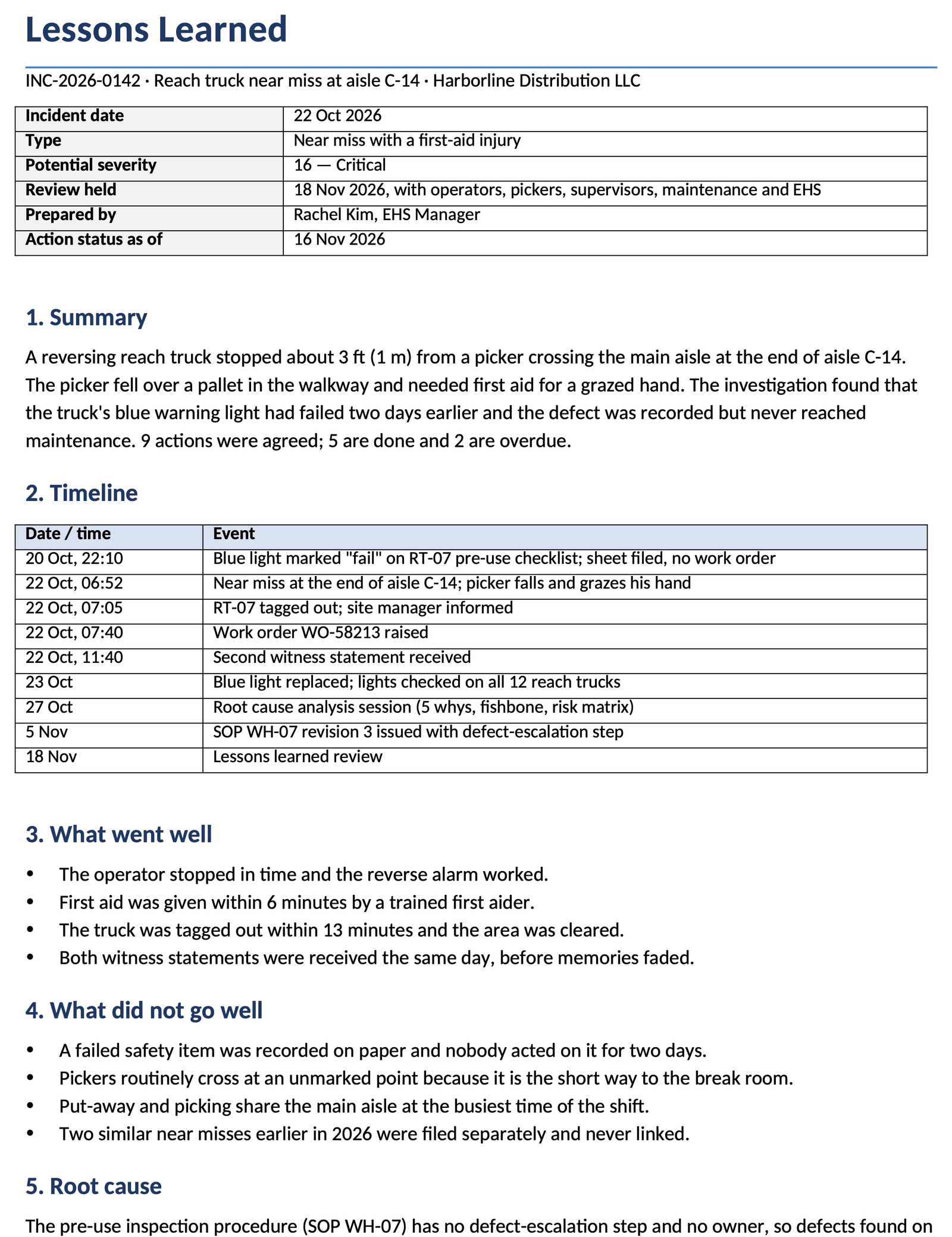
The filled example closes the warehouse near miss: a nine-step timeline, four things that went well, four that did not, the root cause from the analysis, nine actions with owners and status as of 16 Nov 2026, five procedure changes and a one-page close-out note to everyone involved.
Common mistakes
The people who do the work are the ones who need the lesson. Send the close-out note to them first.
"Be more careful" is not a lesson. Each lesson should point to a changed procedure, check or design.
If the owners or dates differ from the root cause analysis, nobody knows which is right. Copy them, and say which are overdue.
FAQ
It is free and you do not need an account to fill in the document or to send the close-out note. Sign-in appears only when you save it to a workspace or invite your team.
Everyone directly involved, the witnesses, teams who do the same work, and the managers who approve the procedure changes. The short note is for most people; the full document is for those who sign.
A post mortem usually means the analysis itself, often for IT incidents or projects. Lessons learned is the summary you share afterwards: what changes and why.
After the root cause is agreed and the first actions are under way, while people still remember the details. Many teams do it within a few weeks.
Name people where it helps, such as action owners. Do not present a person as the root cause; describe the conditions that made the mistake possible.
We use no advertising cookies. With your consent we turn on Google Analytics to see which pages help; without it nothing is sent to Google. About cookies