 Jira & Confluence




 Bitrix24
Blame in the facts section
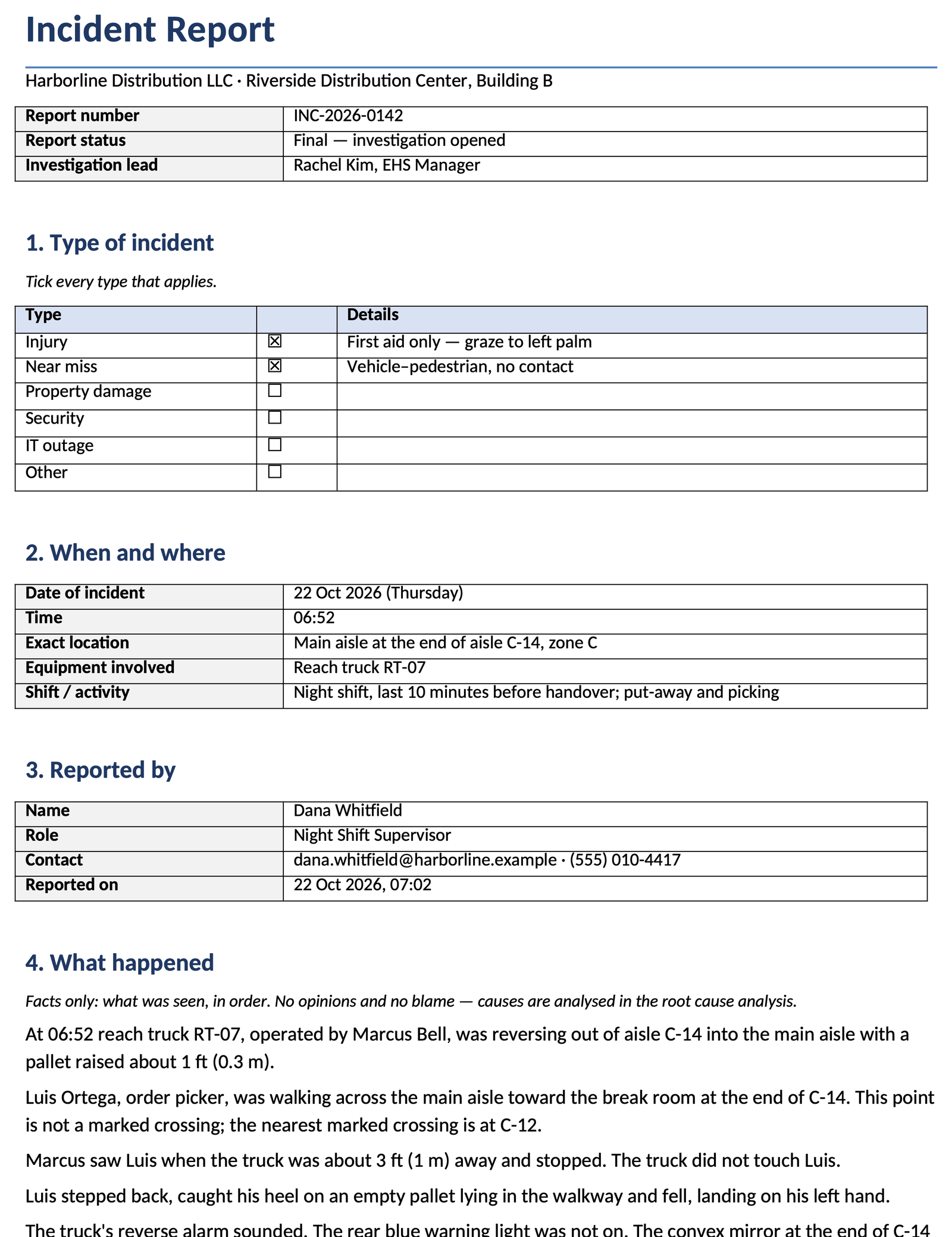
"Careless operator" is an opinion. Write what was seen: "the truck reversed out of aisle C-14 and stopped about 3 ft from the picker". Causes belong in the root cause analysis.
Work
ProjectsTasks, sprints and milestones PagesDocs and knowledge base FormsSurveys, quizzes, booking FlowProcesses and mockupsIncident at work · step 1 of 3
Write down the facts while they are fresh — what, when, where, who — and leave causes for the investigation. Collect each witness statement separately, in their own words.
No sign-up to start. The document stays editable in this browser; sign-in appears only when you save it to a workspace or invite a team.
Start editing here — no sign-up. Send the result first; sign in only if you want to keep it in a workspace or invite your team.
The situation
Something just happened: someone was hurt, nearly hurt, equipment was damaged, a door was forced or a system went down. The first job is a factual record that the supervisor, the safety lead and the insurer can all rely on. This live document opens on the page without registration. Send witnesses a link: each one fills in a short statement on their phone, and it lands in the report.
How to use it
1
Give first aid, stop the equipment, close off the area. The report comes after people are safe.
2
Type of incident, date, time, exact location, equipment, who reported it and what happened, in order.
3
Send each witness the link. Everyone writes separately in the witness statement section, in their own words, the same day if possible.
4
Score the worst credible outcome, record who was told and when, and check what your local regulator requires.
Filled example
The filled example is a warehouse near miss: a reversing reach truck stopped about 3 ft from an order picker at an aisle end. The picker tripped over a pallet and needed first aid for a grazed hand. The report has two witness statements, five immediate actions, five photos and a potential severity of 16 (Critical).
Common mistakes
"Careless operator" is an opinion. Write what was seen: "the truck reversed out of aisle C-14 and stopped about 3 ft from the picker". Causes belong in the root cause analysis.
Witnesses who talk first end up telling the same story. Collect each statement separately, before people compare notes.
A near miss has the same causes as an injury, without the injury. Report it with the same form and rate the potential outcome, not only what happened.
FAQ
It is free and you do not need an account to fill in the report or to send it to witnesses. Sign-in appears only when you save the report to a workspace or invite your team.
No. A witness opens the link, writes a statement and sends it. The statement is added to the report as written.
Yes. A near miss shows a hazard before someone is hurt. Use the same report and rate what could reasonably have happened.
Guesses about causes, blame, and medical opinions. Record the injury as described and the first aid given; leave diagnosis to medical professionals.
It depends on the country, the industry and how serious the outcome was. Check what your local regulator requires and record your decision in the Notifications section.
Yes. Pick the type, describe the timeline and the systems or areas affected, and use the same severity scale.
We use no advertising cookies. With your consent we turn on Google Analytics to see which pages help; without it nothing is sent to Google. About cookies